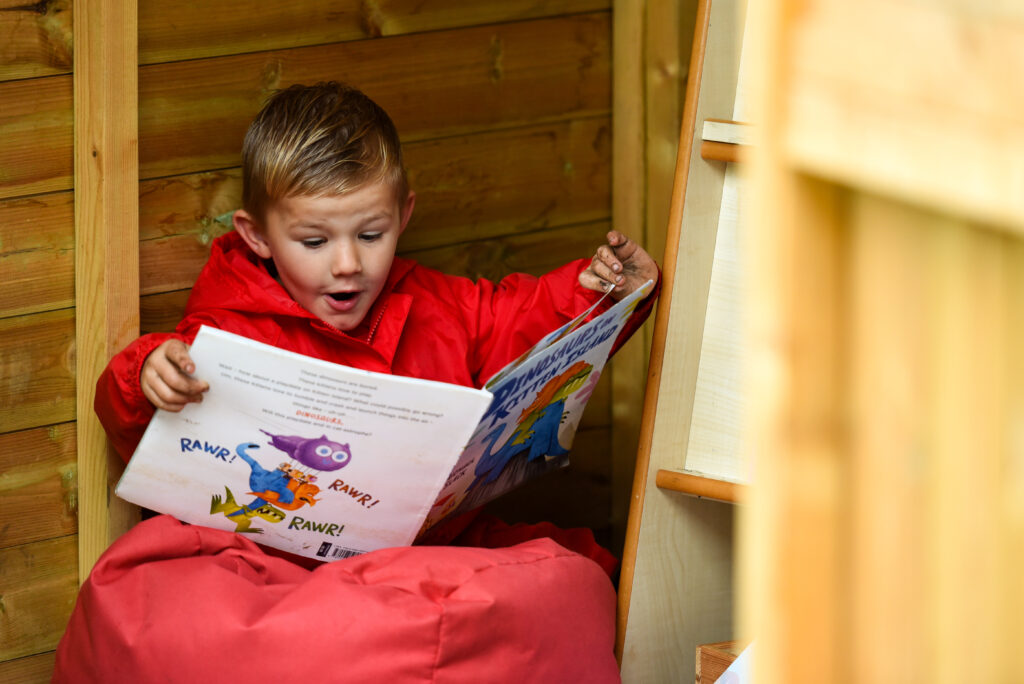
At West Meadows Primary School, the teaching of reading is at the heart of our school, and we aim to ensure our teachers have the knowledge and determination to teach every child, regardless of age, background or need to read. We feel passionately that all children should be equipped with skills and opportunities to become a successful reader. We strive to create a culture for developing a love of reading within our school and this starts from the very beginning of a pupil’s school journey through a combination of phonics and carefully chosen story books, rhymes and texts.
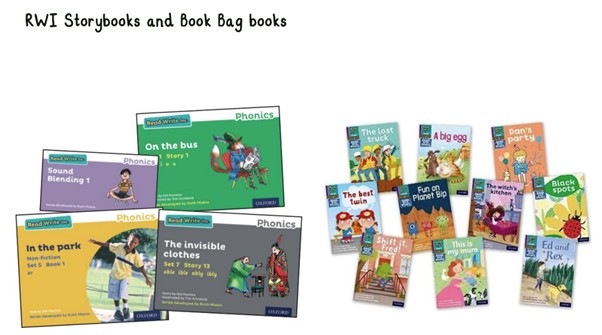
Throughout school we strive to encourage a rounded approach to reading where phonics skills are applied to increase fluency and improve comprehension. Our reading books are levelled to match the progression in phonics to offer children a range of fiction and non-fiction texts to challenge them at an appropriate level to ensure accelerated learning.
“Reading is the gateway for children that makes all other learning possible.”
What is Phonics?
At West Meadows Primary School, pupils learn how to read with ‘Read Write Inc. Phonics (RWI) ‘, a very popular and successful literacy programme. More information about this validated systematic synthetic phonics programme can be found on their website: Phonics – Ruth Miskin Literacy
As a school, we have lots of information about how parents/carers can support to get pupils off to a quick start.
A pupil will learn to read in a very simple way- they will learn to:
1. Read letters by their ’sounds’.
2. Blend these sounds into words.
3. Read the words in a story.
Pupils in Reception, Year 1 and Year 2 who are learning to read, access the Read Write Inc programme. Phonics is also continued for children in Key Stage 2 who haven’t met the end of Key Stage 1 reading expectations and need more support with reading. Daily phonics sessions are introduced in FS1, with a focus on listening games and distinguishing between sounds. We understand that these skills are vital and should also continue to be developed throughout KS1 and KS2. This skill develops children’s abilities to listen to, make, explore and talk about sounds.
During the Read Write Inc programme pupils will be taught to:
• Learn to read confidently, fluently and with expression using a ‘story tellers voice’.
• Use their phonic knowledge and skills to decode letter-sound correspondences quickly and effortlessly.
• Identify and read common exception words.
• Demonstrate understanding with what they have read.
• Spell quickly and easily
• Develop correct letter formation and handwriting.
Pupils are taught how to read and write many different sounds which are displayed in class using friezes and simple sound charts. Children use their knowledge to blend sounds into words, spell words and then to read and write. As children develop their phonics skills, more ways of writing the same sounds are introduced, these are featured on the complex speed sound chart.
Phonics Curriculum
We follow a systematic approach to the teaching of phonics. Using the RWI programme we follow a carefully planned sequence, reinforcing and building on previous learning to secure children’s progress. Synthetic phonics has been proven to be the most effective approach to developing early reading proficiency and at West Meadows, we believe this is the best way to introduce children to the joy of reading delivered as part of a broad and balanced curriculum.
We aim to ensure that our pupils are confident readers, reading with fluency and speed by a minimum of the end of Key Stage 1. To aid this we have a robust assessment procedure which enables pupils to ‘keep up not catch up’. Pupils who are identified as not keeping up with the pace of the lessons will receive ‘fast track tutoring’ to ensure effective and personalised support and interventions are put into place quickly.
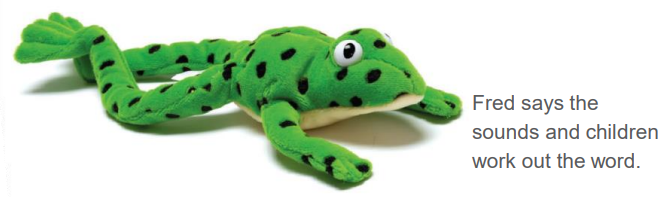
During the teaching of the RWI programme, we give sounds meaning by associating them with a picture and a handwriting rhyme e.g the letter sound ‘c’ is given a picture of a caterpillar and the handwriting rhyme is ‘curl around the caterpillar. This helps with the recall of reading and writing a sound and supports our pupils to retain their knowledge. Pupils are also introduced to a toy frog called Fred. Fred talk is a big focus within phonics lessons and everyday practice. Fred can only speak in sounds, for example, he says c-a-t and sh-i-p etc… Fred talk helps children to distinguish the different sounds in words and to practise blending sounds together because he needs the children to say the words for him. Fred says c-a-t, children tell him the word is cat. This is the main strategy we use to support children to blend words together. Once children start to blend words orally, and then blend to read words, they will bring a sound blending book home to practice this skill using Fred talk.
All phonics sessions occur daily. In Early Years this starts as 20 minutes building up to 45 minutes as the year progresses. RWI is taught for 45 minutes in KS1. We group pupils homogeneously in a ’stage not age’ approach which allows for individual needs to be closely considered.
For pupils moving into KS2 who are still not secure with their phonics knowledge, the pupils continue to access the Read Write Inc programme and additional intervention is put into place to ensure that they catch up quickly.
Expected Progress
Autumn Term Progress Expectations
FS2 Autumn Term 1: at least the first 16 sounds. Assisted Blending. Word time 1.1-1.4
FS2 Autumn Term 2: Lilac Sound blending books. Read all Set 1 single letter sounds. Independent Blending.
Year 1 Autumn Term 1: Purple Books
Year 1 Autumn Term 2: Pink Books
Year 2 Autumn Term 1: Blue Books
Year 2 Autumn Term 2: Grey Books
Spring Term Progress Expectations
FS2 Spring Term 1: Short Ditty Stories
FS2 Spring Term 2: Red Books
Year 1 Spring Term 1: Orange Books
Year 1 Spring Term 2: Yellow Books
Year 2 Spring Term 1: Grey Books
Year 2 Spring Term 2: RWI Programme Completed. Move onto LIRA and year group appropriate books.
Summer Term Progress Expectations
FS2 Summer Term 1: Green Books
FS2 Summer Term 2: Green Books
Year 1 Summer Term 1: Yellow Books
Year 1 Summer Term 2: Blue Books
Assessment of Phonics:
Staff closely monitor pupils progress during phonics sessions to ensure every pupil is ‘keeping up’. If a child is identified as needing additional support, then specific and targeted interventions are put into place immediately to ensure they ‘keep up not catch up’. Reading assessments are carried out half-termly in school by the Reading assessment team, using the RWI individual assessments. These assess a pupil’s sound knowledge along with how pupils are applying these sounds when reading words/ passages. The Reading leaders then assign pupils to a targeted RWI group and work with class teachers and other staff to identify pupils who need additional support. Interventions will take the form of Fast Track Tutoring sessions which will be delivered to pupils depending on their specific phonic need.
Home partnerships and home reading
At West Meadows Primary School, we see home partnerships as a vital key in a child’s learning and we endeavour to give parents as many opportunities as possible to find information about their child’s Early Reading journey to support at home. We organise various Early Reading Workshops throughout the year and provide information and top tips with how parents and carers can support at home.
Pupils will be sent home with reading books closely matched to their current phonic knowledge to give them opportunities to consolidate their learning. A pupil’s fluency will increase with every read of the book that they do. We have a story time every day at school, so children develop a love of stories. We encourage parents/carers to do the same by reading a bedtime story to their child every night to ensure reading is an enjoyable, bonding experience.
“Reading is dreaming with open eyes..”